 © Vyacheslav Argenberg / Wikimedia Commons · CC BY 4.0
The best time of year for an Everest Base Camp helicopter tour
Heli Nepal · · 6 min read
October and November give you the clearest air of the year. Here is what each season actually looks like from the cockpit, and when not to bother.
Nepal has two flying seasons worth planning around, one shoulder season that works more often than people expect, and one season where you should assume the flight will not happen.
The difference is not marginal. In late October the Khumbu is visible almost every morning; in late July it may be closed for a fortnight.
October to early December — the best window
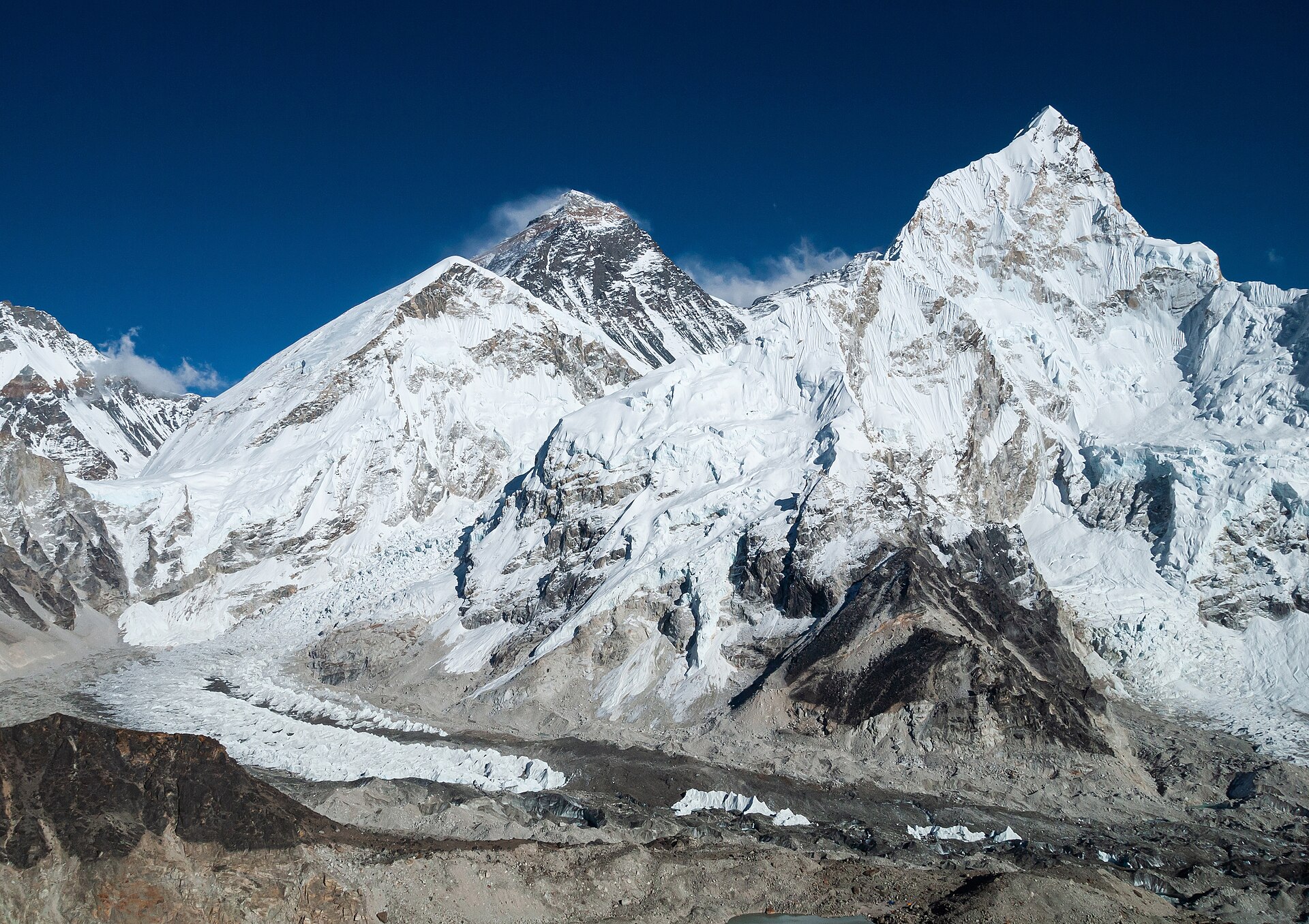
The monsoon has washed the haze out of the air and the winter winds have not yet arrived. Visibility is at its annual peak and morning conditions are stable enough that operators run near-full schedules.
This is also the busiest and priciest window. Book two to four weeks ahead for a shared seat, longer if you want a private aircraft on a fixed date.
March to May — the second window
Spring brings the expedition season, which is the only time a landing at Everest Base Camp itself is realistic — base camp exists as a settlement only while teams are on the mountain.
Air is hazier than autumn and afternoon cloud builds earlier, so departures move even further towards first light.
June to August — assume it will not fly
Monsoon. The valley is frequently closed for days at a time, and operators will cancel rather than push into marginal conditions.
If your dates are fixed inside monsoon, budget several spare days and treat the flight as a bonus rather than a plan. You will not be charged for a flight that does not happen, but you cannot make the weather cooperate.
Why every departure is at dawn
Himalayan valleys heat through the morning, the air destabilises, and cloud fills the valley from below. By early afternoon the Khumbu is usually shut.
That is why every operator wants you airborne by 06:30 and back by lunch, and why a 10:00 departure is a worse product, not a lie-in.