 © calflier001 / Wikimedia Commons · CC BY-SA 2.0
Why they weigh you before a Himalayan helicopter flight
Heli Nepal · · 5 min read
A 75 kg limit is not an insult, it is physics. What altitude does to helicopter performance, and why your bag counts.
Every operator in Nepal publishes a per-passenger weight limit and every one of them will put you on a scale at check-in. Travellers sometimes read this as rudeness. It is the single most important safety number on a high-altitude flight.
Thin air, less lift
A helicopter rotor generates lift by moving air. At 5,500 m there is roughly half as much air per cubic metre as at sea level, so the same rotor at the same speed produces far less lift.
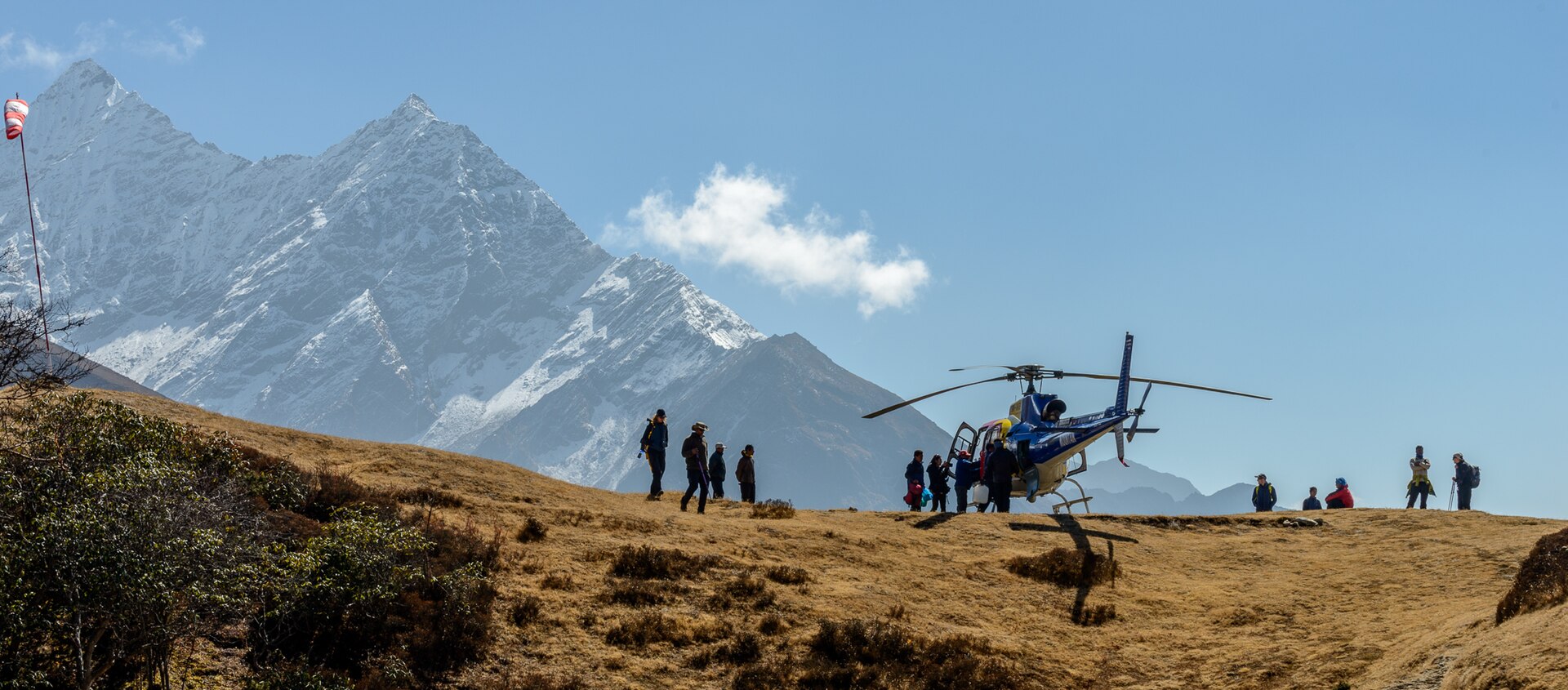
The aircraft that lifted five people easily out of Kathmandu at 1,400 m may only manage two at Kala Patthar. That is not a fault; it is the published performance envelope.
What this means for your day
Landings above 5,000 m are commonly flown in two shuttles: the aircraft drops two passengers, returns for the others, then collects everyone. Your time on the ground is short by design.
Your day bag counts towards the limit. Leave the main luggage at the hotel — every operator expects you to.
Declare it honestly
If your group weighs more than declared, the crew has three options: split the landing, downgrade the itinerary, or refuse the flight. All three cost you more than telling the truth on the booking form.