 © Polyflux / Wikimedia Commons · CC BY-SA 4.0
Muktinath by helicopter: a pilgrim's practical guide
Heli Nepal · · 5 min read
Two hard days of road travel become one morning. What darshan by helicopter is actually like, especially for older pilgrims.
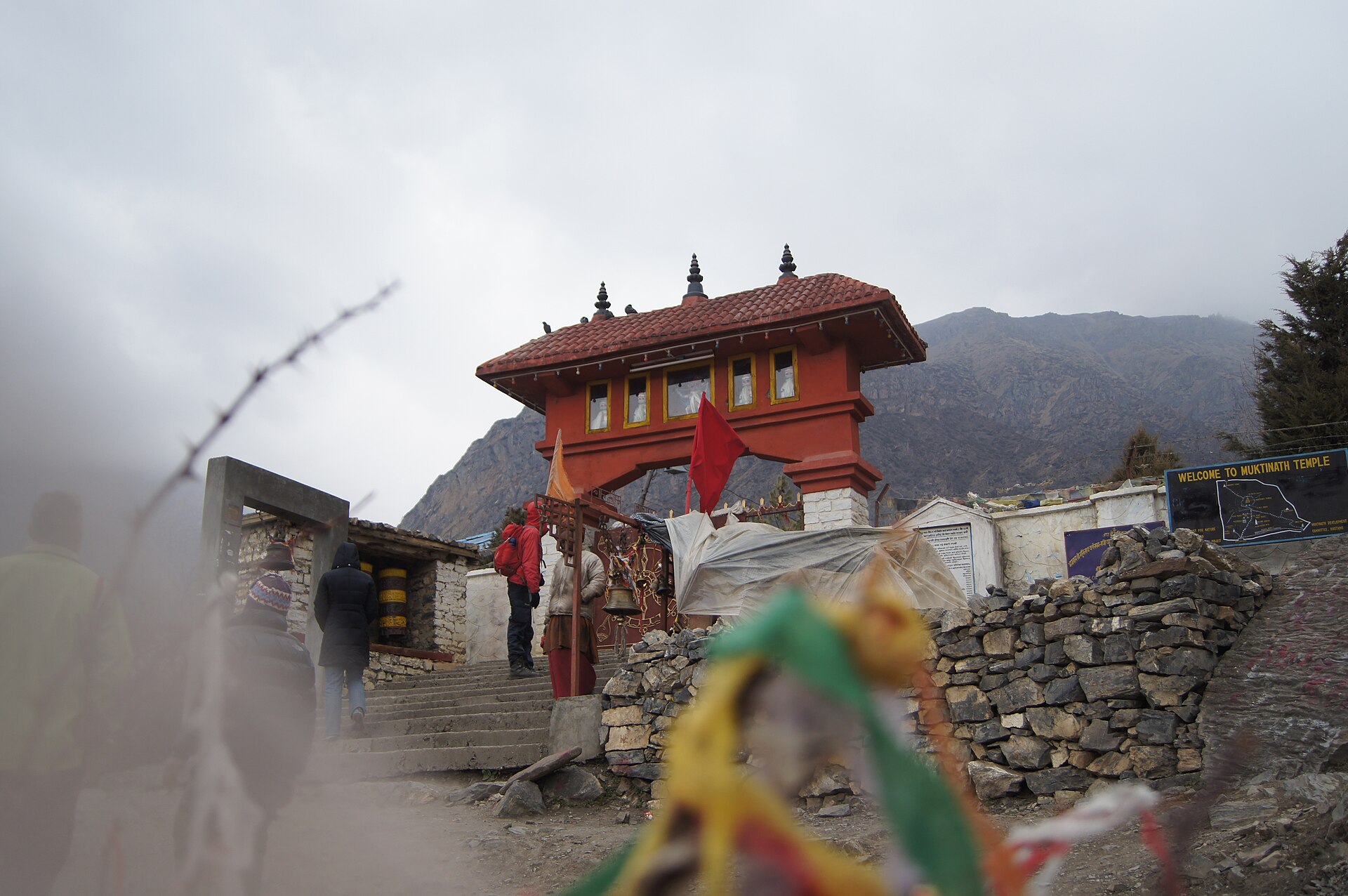
Muktinath sits at 3,710 m in Mustang, sacred to Hindus and Buddhists alike. The road journey up the Kali Gandaki is two punishing days each way. The helicopter makes it a morning.
What the day looks like
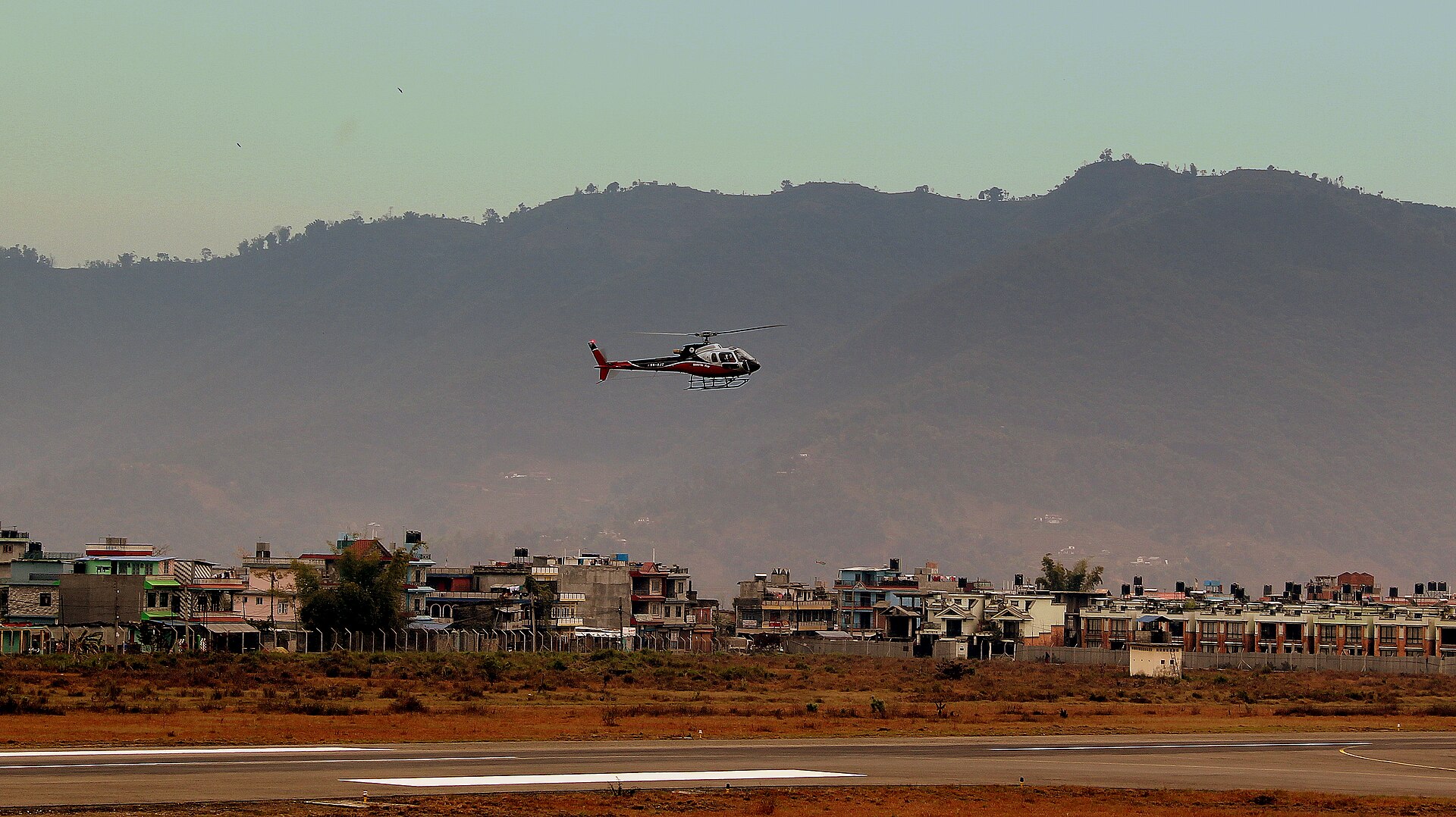
Depart Pokhara shortly after sunrise, fly up the world's deepest gorge between Dhaulagiri and Annapurna, and land near the temple after roughly forty minutes.
You get around an hour on the ground — enough for darshan and the 108 water spouts without rushing — then return before the Jomsom valley wind gets up in the late morning.
Why it suits older pilgrims
Altitude exposure is brief and the walk from the landing site to the temple is short. Compared with two days on a rough road at the same altitude, the helicopter is usually the gentler option.
Tell the operator about mobility needs or heart conditions when you request the flight. They plan the landing and ground time around it.
Timing
The Kali Gandaki funnels a strong, reliable valley wind that builds through the morning. This is why departures are early and why an operator who offers you a midday Muktinath slot is being optimistic.